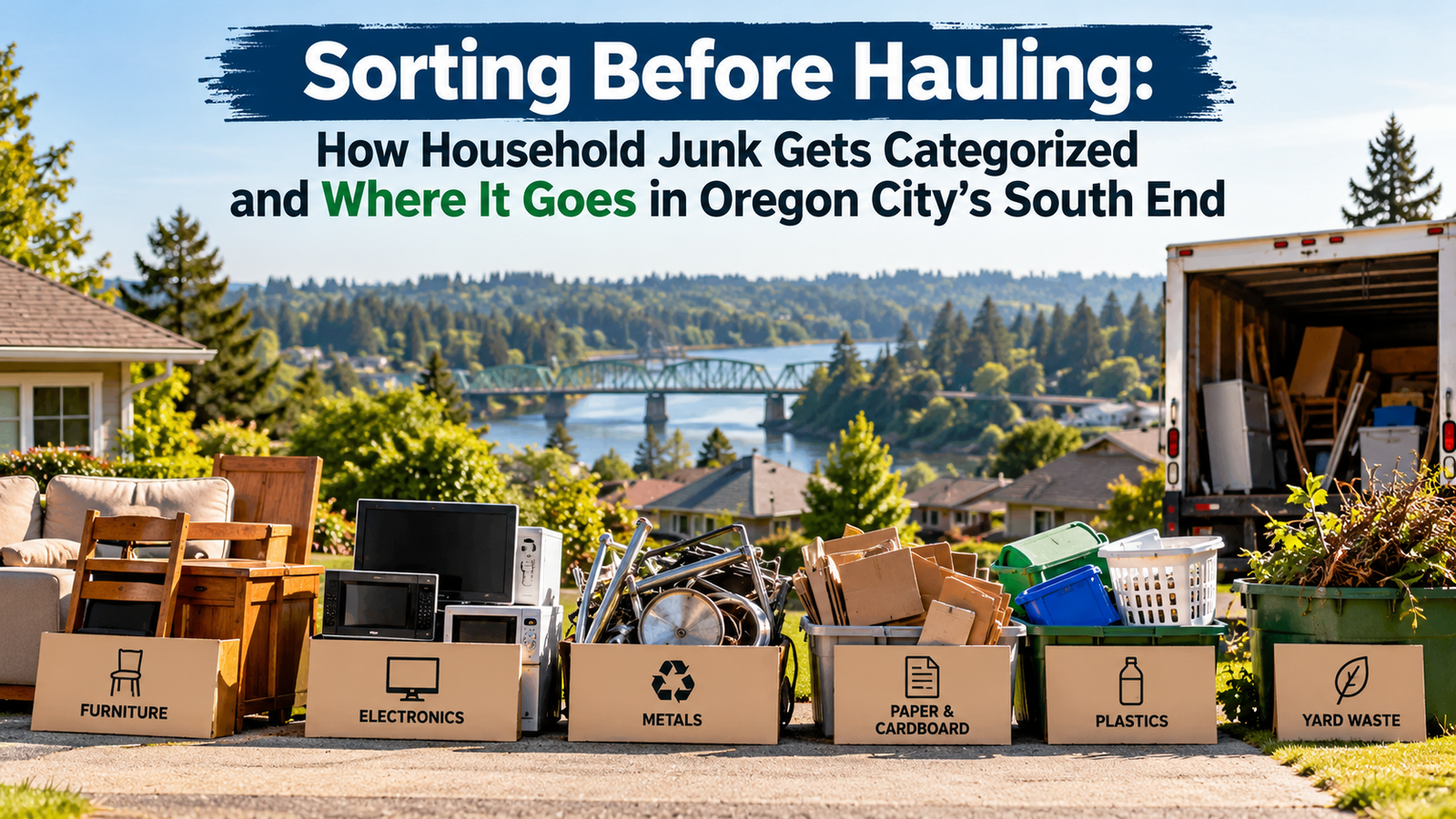
Most households collect more stuff than they realize. It builds up slowly in garages, sheds, spare rooms, basements, and the corners of yards, and one day the pile becomes a project. The first instinct is often to treat it all as one lump of junk. In practice, almost nothing about a good cleanout is lumpy. Different materials follow different paths, some can be donated, some recycled, some need special handling, and a small share really does belong in the landfill. Knowing how those categories work is the key to understanding what a Junk removal service South end does and why the work involves more sorting than hauling.
This guide explains how household junk is classified, what happens to each category, which items need special treatment, and what the process usually looks like from the first walkthrough to the final sweep. The local setting is the South End of Oregon City, Oregon, a residential part of a historic Clackamas County city on the Willamette River, with a mix of older homes, newer subdivisions, steep hillsides, and tree-lined streets. The article is general background rather than instructions for a specific property, and rules in Oregon change from time to time, so local requirements should be confirmed with the relevant agencies.
What “Junk” Really Means
The word junk covers a wide range of things that share only one trait: the owner no longer wants them where they are. Some of it still has plenty of life left. A solid wood dresser, a working lawn mower, and a box of unopened kitchenware are junk only in the sense that they are in the wrong place. Other items are broken, contaminated, or worn out. And some things are not ordinary junk at all, because they contain materials that cannot go in a general waste container.
Thinking in categories helps because each one has its own destination.
The Main Categories
Reusable Household Goods
Furniture, kitchen items, books, toys, clothing, tools, and decor in decent condition can often be given a second life. Thrift stores, charity shops, and community reuse programs accept many of these, though each has its own standards. Items that are clean, complete, and safe are far more likely to be taken. Stained upholstery, broken frames, and missing parts usually are not.
Large Furniture and Mattresses
Bulky furniture is a category of its own because of size and weight. Solid wood pieces can sometimes be donated or resold. Particleboard furniture tends to fall apart when moved and has little resale demand. Mattresses and box springs are a particular case. In Oregon, a mattress stewardship program run through a nonprofit organization supports collection and recycling of mattresses, so they are often routed differently from ordinary trash.
Appliances
Appliances divide into two groups. Working ones can sometimes be donated or resold. Non-working ones are often accepted by scrap metal recyclers, who recover steel, copper, and aluminum. Appliances that contain refrigerants, such as refrigerators, freezers, air conditioners, and dehumidifiers, require proper removal of the refrigerant before recycling, which is a regulated step.
Electronics
Televisions, computers, monitors, printers, and similar devices contain metals and components that should not end up in a landfill. Oregon has a long-running electronics recycling program, the E-Cycles program, which covers certain devices such as computers, monitors, and televisions through participating collection sites. Other electronics, such as small appliances and cables, may go to metal recyclers or special collection events.
Scrap Metal
Metal is one of the most recyclable materials. Old grills, bed frames, shelving, pipes, fencing, and tools can be taken to scrap yards where metal is sorted and sold into the commodity market.
Yard Debris
Branches, brush, leaves, grass clippings, and similar organic material can often be composted. In the Portland metropolitan area, yard debris is generally kept separate from garbage and processed at composting facilities. Treated or painted wood and large stumps may be handled differently.
Construction and Renovation Waste
Lumber, drywall, flooring, cabinets, roofing, concrete, and tile have a variety of recycling and disposal routes. Clean wood and concrete are often recoverable, while mixed debris generally is not. Older materials may contain asbestos or lead paint, which changes how they must be handled.
Household Hazardous Waste
This category deserves its own section because mistakes here create real safety and environmental problems.
General Waste
What remains after reuse and recycling is general waste. It is the smallest category in a well-sorted cleanout, and it goes to a transfer station or landfill.
Household Hazardous Waste in Detail
Products that are flammable, toxic, corrosive, or reactive cannot be treated like ordinary trash. Common examples around a home include:
- Paint, stains, and varnishes
- Solvents and thinners
- Pesticides and herbicides
- Pool chemicals
- Automotive fluids such as motor oil, antifreeze, and brake fluid
- Batteries, including car batteries, rechargeable batteries, and button cells
- Fluorescent tubes and compact fluorescent bulbs, which contain mercury
- Propane cylinders and fuel
- Cleaning chemicals, drain openers, and bleach
- Fireworks and ammunition
In the Portland area, regional government operates household hazardous waste facilities that accept many of these products from residents. Accepted items, hours, and limits are set by the operator, so they should be checked before a trip. Mixing chemicals, leaving them in damaged containers, or putting them in regular trash can cause fires in collection trucks, injuries to workers, and contamination of soil and water.
Most professional junk removal operations will not accept hazardous materials in a general load for that reason, and a good walkthrough begins by identifying what falls into this group.
The Walkthrough: Where a Cleanout Really Starts
A cleanout usually starts with a look at the space. The purpose is to understand what is there, how much of it, where it sits, and what obstacles stand between it and the exit. A walkthrough often notes:
- Volume. How much material is there, roughly measured in truck loads or portions of one?
- Access. Are there stairs, narrow doors, tight hallways, steep driveways, or gates?
- Heavy or awkward items. Pianos, safes, hot tubs, pool tables, and large appliances require planning and extra people.
- Hazards. Mold, pests, sharp objects, broken glass, and chemical containers affect how work proceeds.
- Valuables and sentimental items. Documents, photographs, jewelry, and keepsakes are best set aside by the owner before work begins.
- Disposal routing. What can be donated, what recycled, what must go to a transfer station?
A good plan separates decisions that only the owner can make from tasks that can be done by anyone.
A Practical Sorting Method
Households tackling a cleanout themselves often use a simple system that works well in garages, basements, and storage rooms.
Keep. Items that belong in the home and have a place.
Donate or sell. Items in good condition that someone else can use.
Recycle. Metals, electronics, cardboard, paper, and certain plastics.
Hazardous. Anything chemical, flammable, or battery based.
Trash. Broken, worn out, or contaminated things.
Using labeled boxes or marked areas, such as tarps on a driveway, makes the process faster and prevents things from drifting back into the wrong pile. Starting with the easiest category, usually obvious trash, builds momentum. Leaving the sentimental material for last, once the space is clearer, tends to make those decisions easier.
Where Things Go After They Leave the House
The journey after loading is as important as the cleanup. Loads are typically taken to one or more destinations.
Donation centers. Reusable goods go to charities and reuse stores.
Scrap yards. Metal items are weighed and sorted.
Electronics collection sites. Devices are dismantled for materials recovery.
Composting facilities. Yard debris is ground and turned into compost.
Material recovery facilities. Mixed recyclables and sometimes construction debris are sorted.
Transfer stations. General waste is consolidated and hauled to a landfill. In the Portland area, regional transfer stations also include areas for recovering certain materials before final disposal.
Landfills. The final stop for what cannot be reused or recycled.
The share of a load that avoids the landfill depends on the mix of material. A garage full of metal and reusable goods can reach high diversion rates, while moldy carpet and torn mattresses cannot.
The South End Setting
Oregon City’s South End is part of a city with a distinct geography. The city sits where the Willamette River meets Willamette Falls, with the older downtown on the river terrace and residential areas rising up the bluff and across the plateau. Several local features affect household cleanouts.
Hillside lots. Steep driveways and stairs mean items are carried a long way, and vehicle access can be restricted. This matters for planning, since large pieces may need to be moved by hand.
Older homes. The city has housing from many decades, and older houses often hold a lifetime of accumulated belongings, along with materials such as old paint and treated lumber.
Newer subdivisions. Recent development has brought larger garages and storage spaces, which fill up with equipment, seasonal gear, and moving boxes.
Trees and wet weather. The Pacific Northwest climate produces large amounts of yard debris and keeps stored items damp. Basements and sheds can develop mold or rot, which changes how goods can be handled.
Franchised garbage service. In many Oregon cities, residential garbage and recycling collection is run through franchised haulers under city or county authority. Weekly service handles ordinary household waste, but bulky items typically fall outside regular collection, which is why other routes are often needed.
Regional programs. The Portland metropolitan area has an established system of recycling, hazardous waste, and reuse programs, which makes responsible sorting more practical than in many regions.
Safety in Cleanouts
Clearing out stored items can be physically demanding and occasionally hazardous. General precautions include:
- Wearing sturdy gloves, closed shoes, and eye protection
- Lifting with the legs and asking for help with heavy items
- Using masks when dealing with dust, mold, or animal droppings
- Watching for sharp edges, nails, and broken glass
- Not stacking items in ways that block exits or tip over
- Keeping children and pets away from the work area
- Staying alert for wildlife, including rodents and insects, in long-closed spaces
- Never mixing or opening unidentified chemicals
If a space shows signs of significant mold, structural damage, or biohazards, specialized remediation may be needed before ordinary cleanout work.
Common Misunderstandings
“Anything can go in a dumpster.” Hazardous materials, certain electronics, and some appliances are restricted.
“If it’s in a bin, it’s recyclable.” Contaminated or wrong items in recycling streams cause problems at sorting facilities.
“Donation centers take everything.” They have standards, and unusable goods create disposal work for them.
“Bulky items go out with weekly trash.” Most weekly services do not take large furniture or appliances.
“Yard waste can go in with garbage.” Yard debris is usually collected separately where composting programs exist.
“A cleanout is only about hauling.” Sorting, identifying hazards, and routing materials are a large part of the work.
Frequently Asked Questions
What is junk removal?
It is the collection and disposal or recycling of unwanted household or business items, including furniture, appliances, yard debris, and general clutter.
What kinds of items are not accepted in a typical junk removal load?
Hazardous materials such as paint, chemicals, fuel, and batteries are typically excluded, as are certain regulated items such as asbestos materials.
What happens to junk after it is picked up?
It is sorted. Reusable items go to donation, metals and electronics go to recyclers, yard debris to composting, and the remainder to a transfer station or landfill.
Can mattresses be recycled in Oregon?
Oregon has a mattress stewardship program that provides collection and recycling options, so mattresses are often handled apart from ordinary garbage.
How are electronics handled?
Many are accepted through the Oregon E-Cycles program, which covers certain devices, and other electronics go to specialized recyclers.
Where does household hazardous waste go?
Regional authorities operate collection facilities for residents. Items are sorted and sent for recycling, treatment, or safe disposal.
Is it better to donate or throw away?
If an item is clean, safe, and complete, donation keeps it in use. If it is worn out or damaged, recycling or disposal is the appropriate path.
How can a household prepare for a cleanout?
Set aside valuables and documents, identify hazardous items, group things by category, and clear paths to the exits.
What makes a hillside property harder to clear?
Stairs, steep driveways, and limited vehicle access make carrying and loading more difficult and sometimes require more time and people.
Final Thoughts
A cleanout is mostly an exercise in classification. Reusable things find new owners, metals and electronics return to the materials stream, yard debris becomes compost, hazardous products reach facilities built for them, and only the remainder goes to the landfill. Seeing the work this way makes it clear why a careful removal is more than a truck and a few strong arms.
For readers curious about how a junk remoaval service in the South End fits into Oregon City’s neighborhoods, the sorting framework is a good place to begin. Hillsides, older homes, and a well-developed regional recycling system all shape the way unwanted items leave a property, and understanding those pieces helps explain what happens between the curb and the final destination.